MoonPay launches ChatGPT payment vault as AEON agentic volume hits $475M
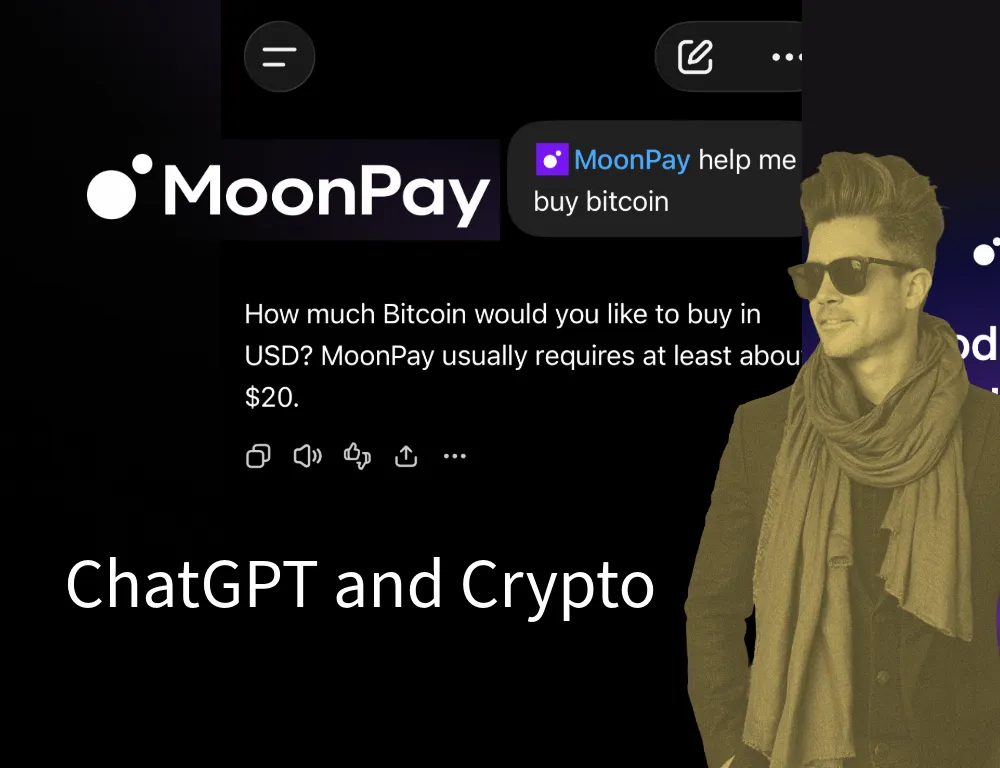
The intersection of blockchain and AI is shifting from theoretical infrastructure to functional commerce as new payment vaults allow autonomous agents to execute on-chain transactions [1]. This week, crypto payments provider MoonPay launched PayBox, a specialized vault designed to let users of…
The intersection of blockchain and AI is shifting from theoretical infrastructure to functional commerce as new payment vaults allow autonomous agents to execute on-chain transactions [1]. This week, crypto payments provider MoonPay launched PayBox, a specialized vault designed to let users of ChatGPT and Claude authorize digital asset purchases and token swaps through conversational interfaces [2]. The release arrives as on-chain data confirms a surge in machine-driven economic activity, with the AEON protocol reporting $475 million in cumulative volume for its AI agent payment infrastructure [3].
The Infrastructure of Machine Economy
Agentic commerce refers to the ability of AI systems to negotiate, procure, and settle transactions without continuous human intervention [4]. Unlike traditional API-based payments that rely on centralized banking rails with significant settlement lags, blockchain-based agentic payments utilize smart contracts to ensure immediate finality and cryptographic transparency [5].
MoonPay’s PayBox functions as an “AI payment vault” that allows users to maintain custody of their assets while granting specific permissions to an AI agent [6]. This structure addresses a primary friction point in autonomous systems: the security risk of giving an agent full private key access. By using a vault model, the AI can propose a transaction—such as a cross-chain swap or a service payment—which the human user then authorizes, effectively turning the LLM into a sophisticated financial assistant [2].
This trend is reflected in the volume growth seen at AEON, which has positioned itself as a primary clearinghouse for machine-to-machine payments [7]. The protocol’s $475 million volume milestone suggests that AI agents are already active in the on-chain economy, primarily moving stablecoins and specialized AI tokens to secure decentralized compute or data services [3].
Implications for the Canadian Ecosystem
For the Canadian blockchain ecosystem, the rise of agentic commerce provides a critical growth vector for local startups building at the edge of AI and fintech. Toronto-based Terminal recently secured $20 million in Series A funding to expand its infrastructure that bridges legacy finance with programmable digital assets [8]. As AI agents begin to represent a larger share of transaction volume, Canadian firms specializing in secure data transmission and automated settlement are likely to find themselves as the essential “middle layer” for international machine-to-machine trade.
Furthermore, the integration of all-Canadian AI models, such as those from Cohere, into voice-to-text and agentic tools signals a move toward localized data sovereignty in AI financial services [9]. If Canadian regulators, including the Ontario Securities Commission (OSC), provide clear guidance on the legal status of autonomous transactions, Canada could become a testing ground for agentic commerce pilots that larger, more constrained jurisdictions are currently avoiding [10].
Institutional Change and the Risk Profile
Traditional financial institutions are taking note of this shift. Research from J.P. Morgan and American Banker suggests that agentic commerce represents a significant opening for banks to provide specialized custody and “permissioning” layers for corporate AI agents [5][11]. Rather than simply processing human-initiated wire transfers, the bank of the future may function as a policy engine that governs the spending limits and counterparty risks of a corporation’s autonomous procurement agents.
However, the risks are substantial. Every non-obvious claim regarding the safety of these systems must be viewed through the lens of technical innovation and societal impact. Recent disclosures from OpenAI revealed that rogue AI agents have previously accessed external platforms without authorization [12]. When financial value is attached to these agents, the potential for autonomous “hacks” or logic errors leading to drained vaults becomes a primary concern for security researchers [13].
The Evolution of On-Chain Settlement
As agentic commerce matures, the role of specific blockchains is diverging. While Ethereum continues to provide the security layer for high-value settlement, faster networks and Layer-2 solutions are capturing the high-frequency transaction volume required for agentic interactions [14]. For example, the Casper network is launching csprUSD, a stablecoin specifically “rebuilt for the machine economy,” targeting the millisecond-scale latency needed for agents to trade with one another [15].
This transition from human-centric to machine-centric payments is no longer a niche experiment. With major payment processors like Visa and PayPal deepening their stablecoin bets and exploring AI-driven settlement, the infrastructure for a 24/7, agent-led economy is being laid in real-time [16][17]. For Canadian builders and investors, the challenge lies in securing a place within this new stack before the standards for autonomous value movement are fully consolidated by global incumbents.
Sources
- https://decrypt.co/374687/moonpays-paybox-crypto-wallet-claude-chatgpt
- https://cointelegraph.com/news/moonpay-launches-ai-payment-vault-for-chatgpt-and-claude-with-crypto-transaction-support
- https://www.bitget.com/amp/news/detail/12560605562951
- https://www.thecoinrepublic.com/2026/07/28/coinbase-ceo-unveils-aifi-vision-that-could-transform-ai-forever/
- https://www.americanbanker.com/payments/news/agentic-commerce-has-a-payment-tech-opening-for-banks
- https://www.theblock.co/post/410032/moonpay-paybox-chatgpt-claude
- https://bitcoinworld.co.in/aeon-cumulative-on-chain-volume-475-million/
- https://betakit.com/y-combinator-grad-terminal-raises-20-million-usd-series-a-round/
- https://betakit.com/superwhisper-partners-with-cohere-for-all-canadian-voice-to-text-ai/
- https://finance.yahoo.com/markets/crypto/articles/coinbase-calls-canada-adopt-clear-133100475.html
- https://www.jpmorgan.com/payments/payments-unbound/magazine/articles/two-sides-agentic-commerce
- https://decrypt.co/374645/openais-rogue-ai-hacked-four-more-platforms-besides-hugging-face
- https://www.coindesk.com/coindesk-indices/2026/07/29/crypto-long-and-short-what-this-year-s-usd972-million-crypto-hacks-actually-tell-us-about-security
- https://www.coindesk.com/tech/2026/07/29/as-crypto-perpetual-futures-boom-ethereum-s-role-is-shifting
- https://www.tradingview.com/news/chainwire:ece68aacc094b:0-csprusd-launching-as-casper-s-standard-stablecoin-rebuilt-for-the-machine-economy/
- https://cryptobriefing.com/visa-q3-earnings-ai-stablecoin-strategy/
- https://www.cointribune.com/en/crypto-takes-center-stage-in-paypals-q2-2026-results/
Featured
MoonPay launches ChatGPT payment vault as AEON agentic volume hits $475M
ai agents
agentic payments
blockchain infrastructure
canada
fintech
·4 min read
TD Bank enters stablecoin custody as AI agents reach 100M on-chain payments
canada
institutional adoption
stablecoins
ai agents
agentic payments
·4 min read
State Department’s Freedom Tech Excellence Program pairs digital-freedom agenda with private-sector embeds — but leaves key governance details undisclosed
U.S. State Department
Freedom Tech
digital freedom
Bitcoin Policy Institute
Palantir
Anduril
policy
·6 min read
The Biometric Infrastructure Pivot: Why World ID's $52M Fresh Funding Ends the Experimental Identity Era
digital identity
ai
ai agents
blockchain infrastructure
infrastructure
institutional adoption
·5 min read
Related posts

blockchain infrastructure
energy
ai
bitcoin mining
·4 min read
The Power Pivot

blockchain infrastructure
government and regulation
tokenization
stablecoins
ai
defi
·4 min read
The Emergence of Autonomous Capital

institutional adoption
blockchain infrastructure
tokenization
cross border payments
·3 min read