The Federal Reserve has signaled a fundamental shift in how it views the intersection of traditional finance a
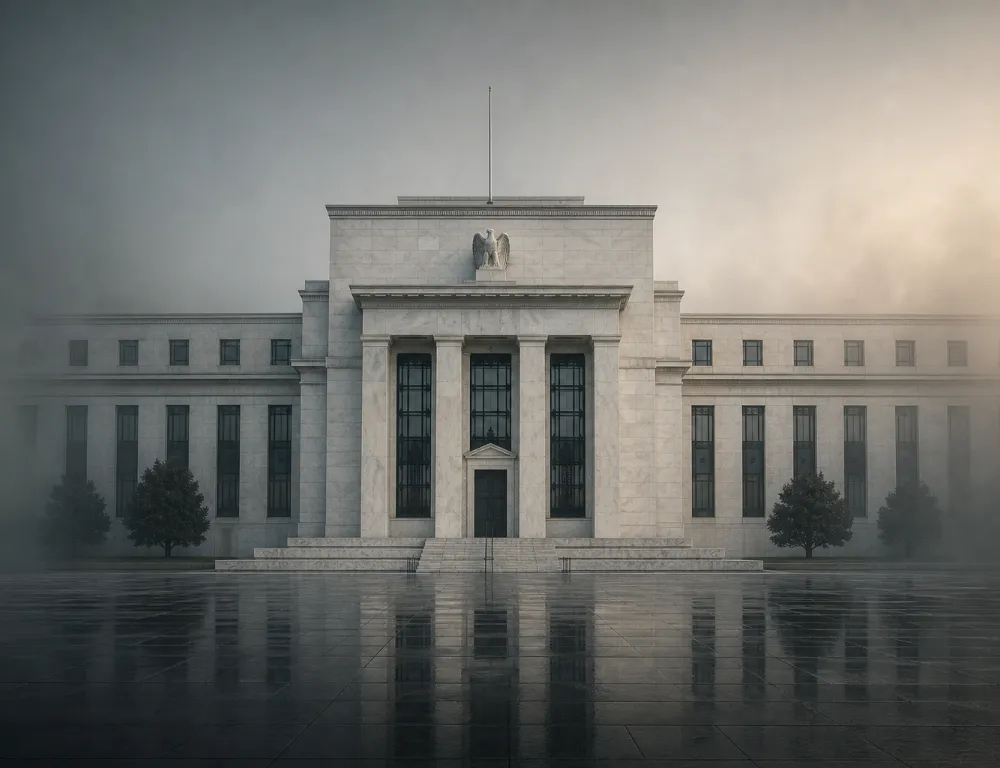
The Federal Reserve has signaled a fundamental shift in how it views the intersection of traditional finance and digital asset networks. During his inaugural appearance at the Jackson Hole Economic Symposium as Chair, Kevin Warsh introduced an unusual agenda that placed payments and financial…
Central Banking Meets Distributed Infrastructure
The Federal Reserve has signaled a fundamental shift in how it views the intersection of traditional finance and digital asset networks. During his inaugural appearance at the Jackson Hole Economic Symposium as Chair, Kevin Warsh introduced an unusual agenda that placed payments and financial infrastructure at the center of the central bank’s policy discussion [1]. For the first time in approximately four decades, the Fed’s flagship gathering has formally addressed crypto-related technological themes as a matter of institutional priority [2].
This move represents a transition from treating blockchain technology as a peripheral regulatory concern to viewing it as a core component of the global settlement layer. For Canadian institutions, this shift suggests that the Bank of Canada and domestic regulators like the Office of the Superintendent of Financial Institutions (OSFI) may face increased pressure to harmonize their digital asset frameworks with a more technologically integrated U.S. monetary policy. As the Fed begins to prioritize the modernization of settlement layers, Canadian banks and pension funds—already active in the digital asset space—will likely need to adjust their infrastructure strategies to remain compatible with evolving U.S. standards [3].
Market Volatility and Settlement Modernization
The anticipation of Warsh’s debut triggered significant movement across major digital assets. Before the speech, Bitcoin struggled to hold the $80,000 level while Solana led other major cryptocurrencies higher [4]. Traders had braced for the address, recognizing it as a major event for both the digital asset market and traditional hedges like gold [2].
In his keynote remarks, Warsh balanced technological optimism with a traditional focus on price stability. He explicitly stated that the Fed has “work to do” on inflation, maintaining a hawkish tone that initially cooled market exuberance [5]. However, the broader focus on infrastructure modernization suggests that the Fed is no longer looking at blockchain solely through the lens of risk, but rather as a potential tool for improving the speed and transparency of value transfer [6].
Implications for the On-Chain Economy
The integration of blockchain themes into the Jackson Hole agenda provides a new level of institutional normalization for the on-chain economy. By focusing on settlement layers, Warsh is directing the conversation toward how value moves rather than just how assets are priced. This is particularly relevant for the Canadian ecosystem, where the development of wholesale CBDC experiments and private stablecoin rails has been a primary focus of financial incumbents.
If the Federal Reserve moves forward with integrating these technologies into its settlement framework, it could accelerate the adoption of programmable money within the North American trade corridor. This would force a re-evaluation of how trust is established between central banks and private decentralized networks. While Warsh’s immediate concern remains inflation, the inclusion of digital infrastructure in the Fed’s long-term vision indicates that the plumbing of the financial system is undergoing its most significant overhaul in the post-Bretton Woods era [3].
A New Regulatory Baseline
The symposium’s focus on these themes suggests that the regulatory environment is moving away from purely restrictive measures toward a framework that supports institutional infrastructure. For Canadian regulators, the U.S. shift provides a roadmap for balancing innovation with financial stability. As the Fed clarifies its stance on digital settlement, Canada may find a clearer path for its own regulated blockchain initiatives, potentially reducing the friction currently experienced by firms operating across the border.
While the immediate market reaction was shaped by Warsh’s hawkish inflation comments, the long-term takeaway for industry executives is the Fed’s admission that the current financial infrastructure requires modernization [5]. The era of treating blockchain as an experiment appears to be closing, replaced by a period where decentralized networks are evaluated as legitimate candidates for the next generation of global financial settlement [2].
Sources
- https://decrypt.co/376737/bitcoin-resistance-jackson-hole-fed-agenda
- https://www.coindesk.com/markets/2026/08/28/here-s-why-warsh-s-jackson-hole-speech-is-a-major-event-for-bitcoin-and-gold
- https://www.federalreserve.gov/newsevents/speech/warsh20260828a.htm
- https://www.coindesk.com/markets/2026/08/28/bitcoin-holds-usd80-000-solana-leads-majors-higher-before-warsh-s-jackson-hole-debut
- https://www.coindesk.com/markets/2026/08/28/warsh-at-jackson-hole-we-have-work-to-do-on-inflaiton
- https://www.coindesk.com/markets/2026/08/27/bitcoin-holds-near-usd80-000-as-traders-brace-for-warsh-s-jackson-hole-fed-speech
Featured
MoonPay launches ChatGPT payment vault as AEON agentic volume hits $475M
ai agents
agentic payments
blockchain infrastructure
canada
fintech
·4 min read
TD Bank enters stablecoin custody as AI agents reach 100M on-chain payments
canada
institutional adoption
stablecoins
ai agents
agentic payments
·4 min read
State Department’s Freedom Tech Excellence Program pairs digital-freedom agenda with private-sector embeds — but leaves key governance details undisclosed
U.S. State Department
Freedom Tech
digital freedom
Bitcoin Policy Institute
Palantir
Anduril
policy
·6 min read
The Biometric Infrastructure Pivot: Why World ID's $52M Fresh Funding Ends the Experimental Identity Era
digital identity
ai
ai agents
blockchain infrastructure
infrastructure
institutional adoption
·5 min read

Related posts

government and regulation
stablecoins
clarity act
·5 min read
The Timing Trap: Why the CLARITY Act is Reaching a Regulatory Breaking Point

institutional adoption
tokenization
corporate treasury
bitcoin
ethereum
·5 min read
The Divergent Treasury: Why the Next Phase of Corporate Crypto is Leaving the Saylor Playbook Behind

blockchain infrastructure
government and regulation
tokenization
stablecoins
ai
defi
·4 min read